
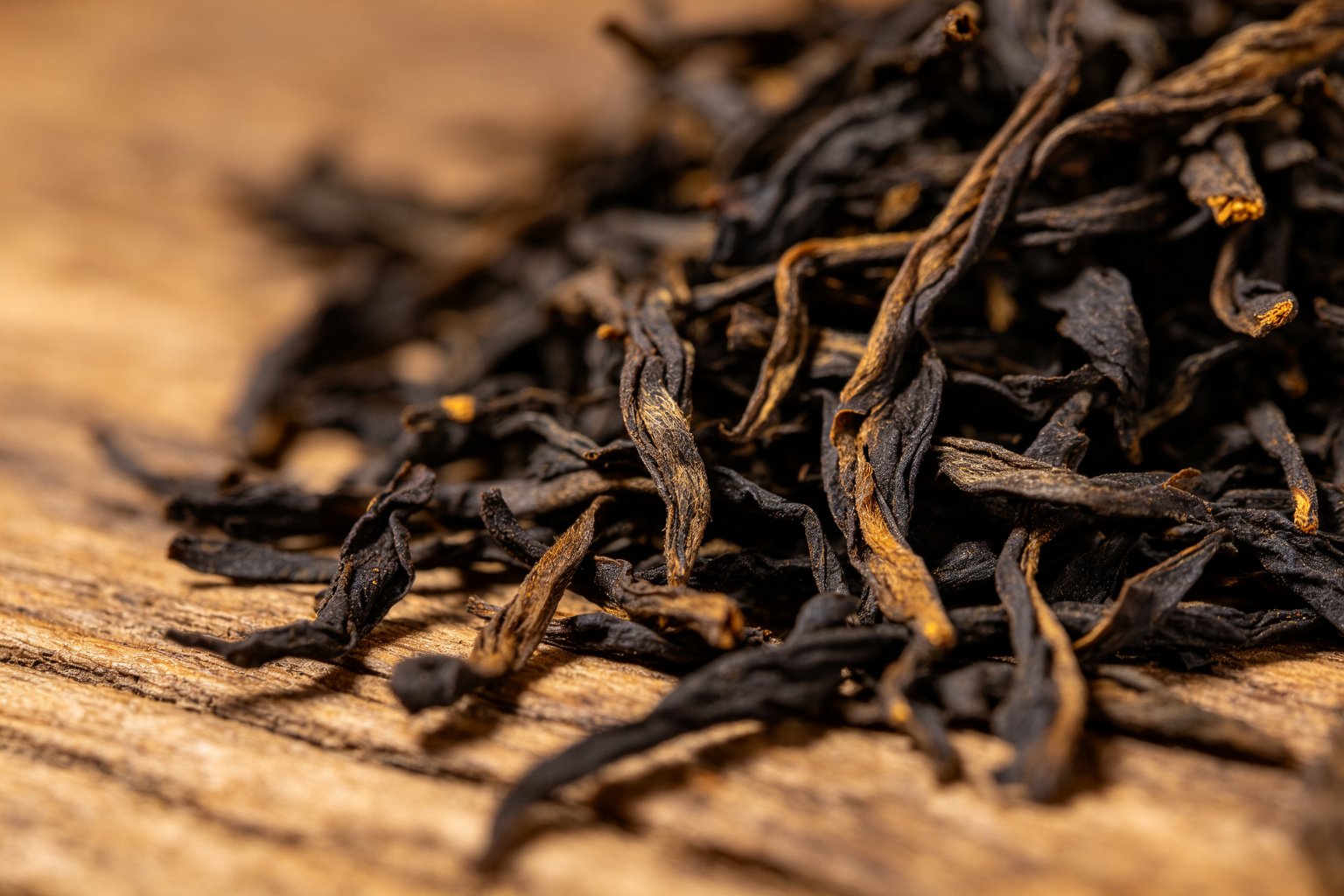
What is post-fermented tea?
Post-fermented tea, known in Chinese as hei cha or dark tea, is one of the six major categories of Chinese tea. What sets post-fermented tea apart from all other tea types is that it undergoes microbial fermentation after the initial processing is complete. This secondary fermentation, which can continue for years or even decades during storage, transforms the tea into a beverage that improves with age.
While green, white, oolong, and black teas are at their best when fresh, post-fermented teas develop greater complexity, smoothness, and depth over time. The microbial activity breaks down harsh compounds, creates new flavor molecules, and produces the characteristic smooth, mellow, aged quality that tea connoisseurs prize.
How Post-Fermentation Works
Post-fermentation is a two-stage process:

Stage 1: Initial Processing and Pile Fermentation
After withering, rolling, and initial drying, the tea leaves undergo wo dui (pile fermentation). The leaves are piled into large heaps, moistened with water, and covered with cloth to retain heat and humidity. Over several weeks, naturally occurring microorganisms including Aspergillus niger, various yeasts, and bacteria break down the tea polyphenols, converting them into theaflavins and thearubigins. This is what gives dark tea its characteristic dark color and mellow taste.
Stage 2: Aging and Slow Transformation
After pile fermentation, the tea is compressed into cakes, bricks, or baskets, or left as loose leaf. During storage, slow microbial activity and oxidation continue, gradually transforming the tea. Over years, the harsh wet pile aroma dissipates, and complex notes of aged wood, dried fruit, betel nut, and medicinal herbs emerge. This aging process is what makes post-fermented tea unique among all tea categories.
Major Types of Post-Fermented Tea
China produces several distinct types of post-fermented tea, each with its own regional character:
| Tea Type | Origin | Characteristics |
| Liubao Tea | Wuzhou, Guangxi | Betel nut aroma, smooth mellow taste, ages beautifully |
| Pu-erh Tea | Yunnan | Most famous dark tea, raw (sheng) and ripe (shou) varieties |
| Fu Brick Tea | Hunan | Golden flower (jinhua) mold, unique medicinal aroma |
| Hei Zhuan | Hunan | Compressed brick tea, historically traded along Tea Horse Road |
| Hubei Lao Qing Cha | Hubei | Old green tea, brick form, earthy and robust |
| Sichuan Bian Cha | Sichuan | Border tea, traditionally traded to Tibet |
Liubao Tea: Guangxi Post-Fermented Treasure
Among all post-fermented teas, Liubao tea from Wuzhou, Guangxi holds a special place. With over 1,500 years of history, Liubao tea was one of the first dark teas to be traded internationally, reaching Southeast Asia during the Qing Dynasty. Its distinctive betel nut aroma (binlang xiang), smooth mouthfeel, and remarkable aging potential make it a favorite among serious tea collectors.
Unlike Pu-erh, which is often compressed into large round cakes, Liubao tea is traditionally stored in woven bamboo baskets, which allows for optimal air circulation and humidity regulation during aging. This traditional storage method contributes to Liubao tea unique basket aroma and smooth, refined character.
Health Benefits of Post-Fermented Tea
Post-fermented teas have been valued for centuries for their health-promoting properties, particularly in aiding digestion and cutting grease after rich meals:
- Digestive support: The microbial metabolites in post-fermented tea help break down fats and proteins, making it an ideal after-meal beverage.
- Antioxidant properties: Theaflavins and thearubigins produced during fermentation are potent antioxidants.
- Gut health: Post-fermented tea contains beneficial microbial compounds that may support a healthy gut microbiome.
- Lower caffeine: The fermentation process reduces caffeine content compared to green or black tea, making it suitable for evening consumption.
How to Brew and Store Post-Fermented Tea
Post-fermented teas require boiling water (100C) to properly extract their flavors. The gongfu method with short, multiple infusions is ideal. Start with a 5-10 second rinse to awaken the leaves, then steep for 15-20 seconds, increasing by 10 seconds for each subsequent infusion. A quality aged post-fermented tea can be steeped 8-15 times. For detailed instructions, see our complete brewing guide.
Store in a cool, dark, odor-free environment with 60-80% humidity. Use breathable packaging (paper, bamboo, or cotton), never airtight containers. With proper storage, post-fermented tea can improve for decades. Learn more in our Liubao tea aging guide.
Start Your Dark Tea Journey
Post-fermented tea offers a unique tea experience that evolves over time. Explore our authentic Liubao tea collection from Wuzhou, Guangxi, and discover why this ancient dark tea has captivated tea lovers for over 1,500 years. Pair with a handcrafted Nixing teapot for the ultimate brewing experience. Learn more in our comprehensive Chinese Dark Tea Guide.
Explore More
Go deeper: Chinese Dark Tea: Complete Guide
Shop the Story
Teas and teawear mentioned in this guide
