
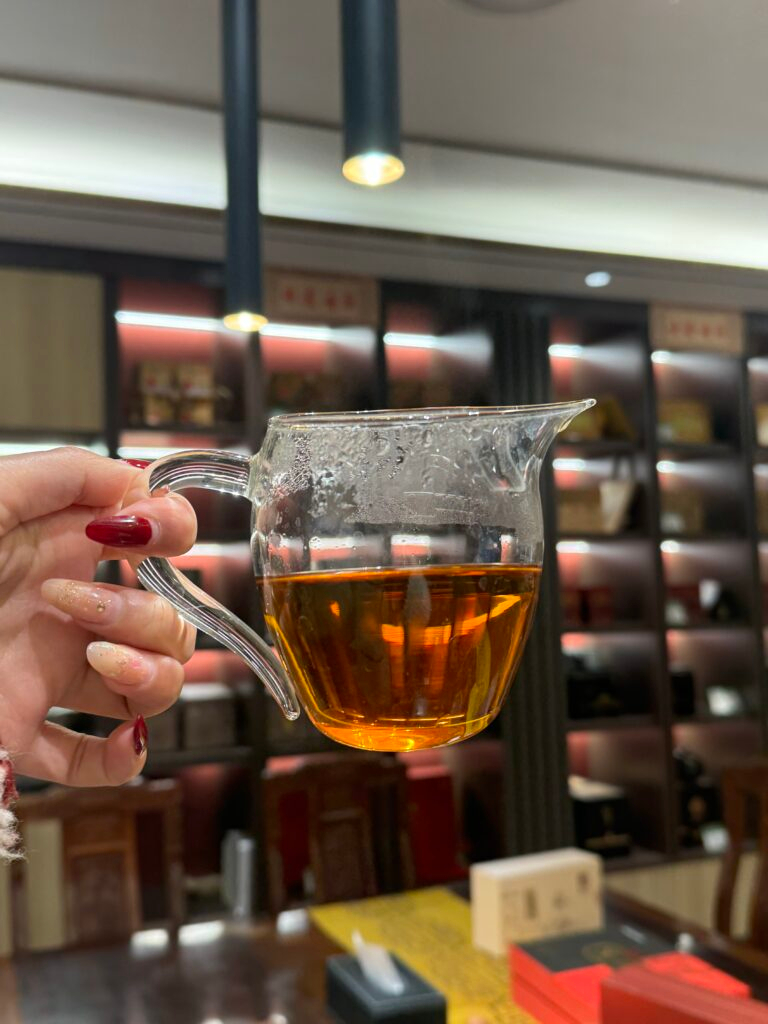
Does Liubao Tea Affect Sleep? Scientific Insight on Black Tea
Many tea lovers wonder: does drinking Liubao tea affect sleep? The main component in tea that may influence sleep is caffeine. Black tea, including Liubao tea, undergoes a long pile-fermentation process that reduces caffeine content significantly. On average, 100ml of Liubao tea contains about 20mg of caffeine, much lower than green tea’s 70mg. This makes Liubao tea gentler and less likely to disturb sleep.
During the production of black tea, abundant L-theanine and polyphenols are preserved. L-theanine promotes relaxation, protects brain cells, and helps counteract the stimulating effects of caffeine, supporting a calm and restful state.
Of course, individual sensitivity varies. It is recommended to avoid drinking too much or too strong Liubao tea before bedtime to ensure proper sleep.
In conclusion, Liubao tea does not significantly affect sleep, and its unique fermentation process and rich L-theanine content may even provide soothing and calming benefits, making it an ideal choice for evening relaxation.