
Why Liubao Tea Has Subtle Aroma Explained
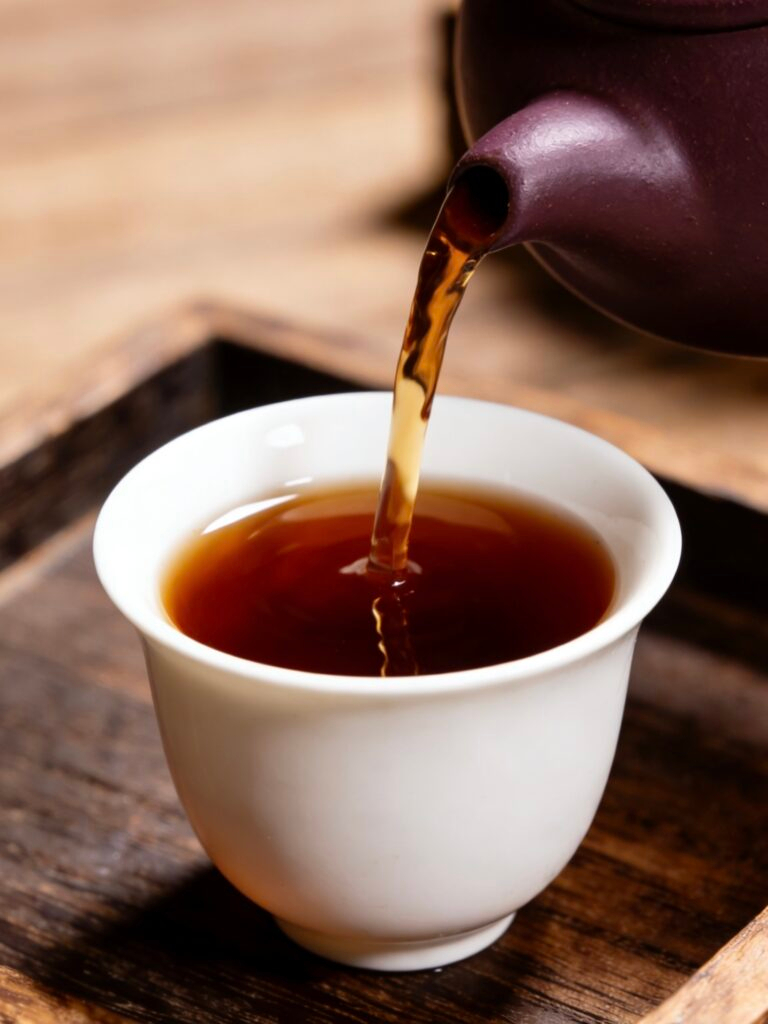
Why Does Liubao Tea Have a Subtle Aroma?
Many tea drinkers notice something interesting when they first try Liubao tea aroma:
👉 The fragrance is not as strong or as “high” as other teas.
So, does that mean Liubao tea lacks aroma?
Not at all. In fact, this is a defining characteristic of this traditional Chinese dark tea.
1. Liubao Tea Is Flavor-Focused, Not Aroma-Driven
To begin with, Liubao tea belongs to a category often described as a “flavor-oriented tea.”
Unlike some teas that emphasize strong fragrance, Liubao tea aroma is more subtle and restrained. Instead, it focuses on:
- A rich and smooth body
- A mellow and sweet taste
- A long-lasting aftertaste
In other words:
👉 Liubao tea is meant to be tasted, not just smelled.
Because of this, judging it purely by aroma can lead to misunderstanding its true quality.
2. Differences Between New and Aged Liubao Tea
Another important factor is time. The aroma of Liubao tea evolves significantly as it ages.
New Liubao Tea: Light and Gentle Aroma
Freshly produced Liubao tea usually has:
- A soft sweet aroma
- Subtle ripe fruit notes
However, these aromas are:
- Not intense
- Not highly expressive
- Easy to overlook
As a result, many beginners feel that the tea is “not very fragrant.”
Aged Liubao Tea: Deep and Complex Notes
As Liubao tea ages, it develops the signature profile of aged Liubao tea:
- Woody notes
- Earthy depth
- A mellow, aged character
More importantly:
👉 The aroma is experienced more in the mouth and throat than in the nose.
This is often described as a dark tea flavor profile—deep, smooth, and lingering.
You don’t just smell it.
You feel it as you drink.
3. Why You May Not Notice the Aroma
If you feel the aroma is weak, there are a few possible reasons.
1. Expectation Gap
Many people compare Liubao tea to highly aromatic teas.
However, Liubao tea taste is the main focus—not strong fragrance.
2. Brewing or Drinking Too Quickly
Liubao tea reveals its character slowly.
If you drink it too fast, you may miss:
- The evolving taste
- The returning sweetness
- The throat sensation
3. Tea Age Matters
New tea = lighter aroma
Aged tea = deeper, more noticeable character
👉 Trying an aged Liubao tea can make a big difference.
4. How to Better Experience Liubao Tea Aroma
To fully appreciate Liubao tea aroma, try adjusting your brewing and tasting approach:
- Use a gaiwan or clay teapot
- Brew with boiling water (212°F / 100°C)
- Allow slightly longer steeping time
- Sip slowly and mindfully
As you drink, pay attention to:
👉 Is the texture smooth and full?
👉 Does sweetness return after swallowing?
👉 Is there a lingering sensation in the throat?
These are the true expressions of Liubao tea.
Final Thoughts
In summary, the subtle Liubao tea aroma is not a flaw—it is a feature.
Unlike bold and fragrant teas, Liubao tea offers:
- Depth instead of intensity
- Smoothness instead of sharpness
- A lingering, evolving experience
That’s why, among all Chinese dark tea, Liubao tea stands out as a tea that rewards patience and attention.
👉 Once you shift from “smelling aroma” to “tasting depth,”
you begin to truly understand Liubao tea.