
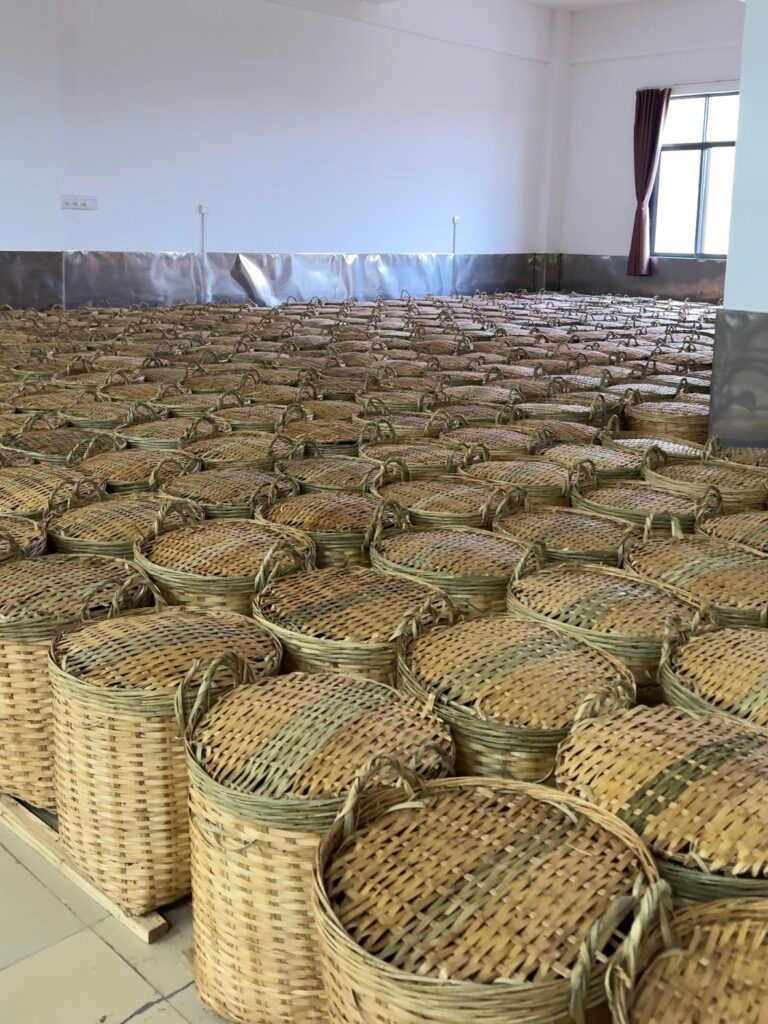
Liu Bao tea’s piling fermentation process: A long history, ahead of Pu’er ripe tea
Liu Bao tea, as one of China’s traditional famous teas, has a profound history in the fermentation process of tea leaves. Particularly, the piling fermentation process of Liu Bao tea holds an important position in the history of Chinese tea. Many people are familiar with the piling process of Pu’er tea but are less aware of Liu Bao tea’s fermentation techniques. In fact, the application of Liu Bao tea’s piling process predates that of Pu’er ripe tea, a fact that is often overlooked. In this article, we will take you through the history of Liu Bao tea, its fermentation techniques, and its relationship with Pu’er tea.
1.The history of Liu Bao tea’s piling fermentation process
The earliest written record of Liu Bao tea’s piling fermentation process appeared in the 1959 book “Tea Processing Technology and Machinery.” It was researched and applied in Liu Bao tea production by the Guangxi branch of China Tea Export Company (now Wuzhou China Tea Industry Co., Ltd.) starting in 1958. The essence of this process lies in piling tea leaves and humidifying them to simulate the conditions of natural fermentation, which accelerates the transformation of the tea leaves and results in a unique flavor.
2.The development and application of Liu Bao tea’s piling technique
Liu Bao tea’s cold water piling technique, as part of the piling fermentation process, was applied to large-scale production as early as the late 1950s. Compared to the piling process of Pu’er ripe tea, which was first documented in 1974, Liu Bao tea’s technique was developed 16 years earlier. Therefore, Liu Bao tea’s fermentation process is considered to have played a significant role in the history of tea fermentation and provided valuable experience for the later development of Pu’er tea.
3.The characteristics and flavor of Liu Bao tea
Liu Bao tea’s characteristics are not only reflected in its unique piling fermentation process but also in the flavor and aroma of the tea. After fermentation, the leaves turn a deep brown, and the liquor becomes a bright red with a rich, mellow taste. It carries distinctive woody, earthy, and aged aromas. Over time, the flavor becomes more complex, often making it a tea that people become loyal to after just one taste.
How to choose the right Liu Bao tea for you?
1.Understand the impact of the piling process: When selecting Liu Bao tea, knowing about its piling fermentation process is crucial for judging the tea’s flavor and aging potential.
2.Choose based on taste preferences: Those who prefer a rich taste can opt for aged Liu Bao tea, while those who enjoy a fresher taste may choose younger versions of the tea.