Liu Bao tea is a famous Chinese dark tea (hei cha) originating from Guangxi Province. When people first encounter Liu Bao tea, they often hear that it comes in two different processing styles: traditional and modern.
While both belong to the same tea category, the way they are made greatly influences their flavor, aroma, aging potential, and drinking experience. Understanding these two methods will help you choose the Liu Bao tea that best suits your taste and purpose.
Traditional-Process Liu Bao Tea
Basic Processing Steps
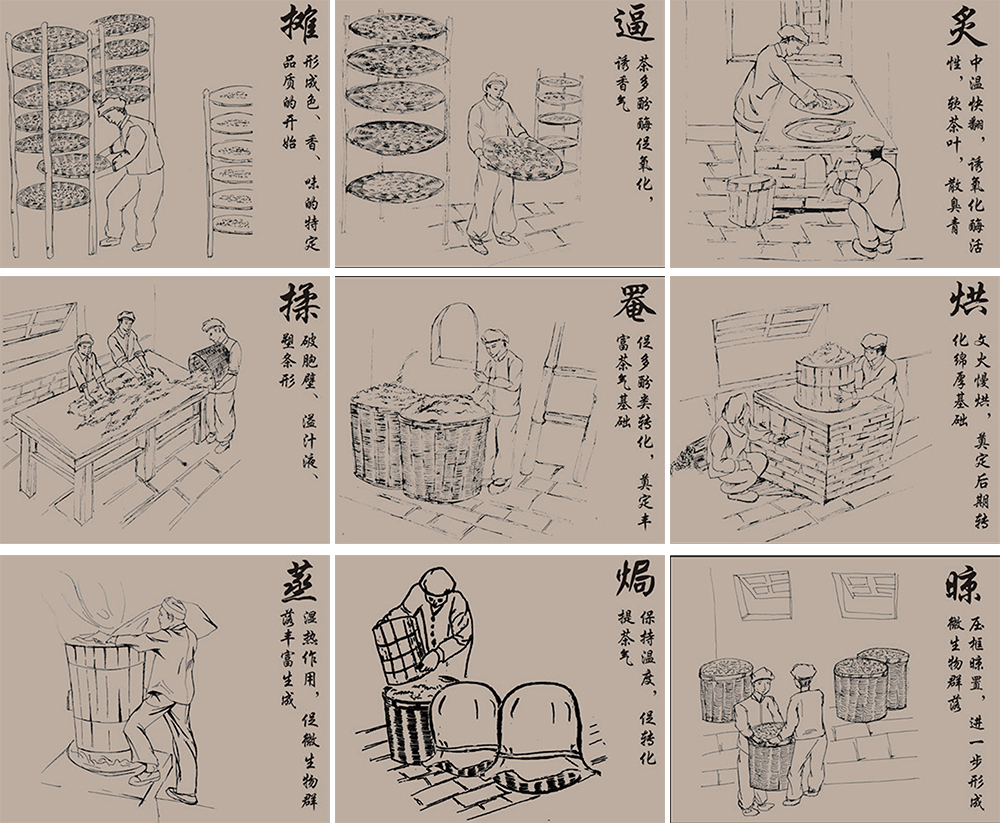
Traditional Liu Bao tea follows a natural transformation process and does not use artificial pile fermentation. The simplified workflow is:
Pan-firing (kill-green) → Initial rolling → Pile resting → Re-rolling → Drying → Sorting→ (Blending) → (Steaming) → (Compression) → (Aging)
Steps in parentheses are optional and may or may not be included depending on the producer and final product form.
Processing Characteristics
- No wet-pile fermentation: Transformation occurs naturally over time.
- Slow development: Flavor evolves gradually during long-term aging.
- High raw material requirements: Leaf quality and growing environment play a crucial role.
Flavor Profile
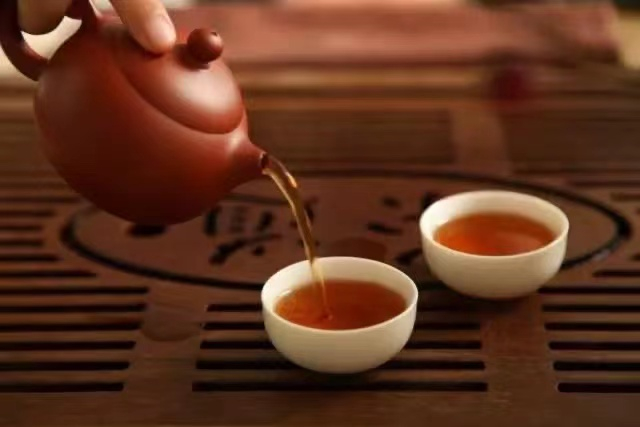
When young:
- Firm structure, slightly green or woody notes
- Noticeable bitterness and astringency
After aging:
- Woody, herbal, and medicinal aromas
- Fuller body and smoother texture
- Long-lasting aftertaste
In short: Traditional Liu Bao tea trades time for complexity.
Modern-Process Liu Bao Tea
Basic Processing Steps
Modern Liu Bao tea introduces controlled wet-pile fermentation, inspired by large-scale dark tea.
production methods:
Tea leaves processed into maocha (heating → rolling → drying)→ Wet-pile fermentation (controlled humidity and temperature for several weeks)→ Steam heating→ Compression into bamboo baskets→ Warehouse storage
The wet-pile fermentation stage is the key difference from the traditional method.
Processing Characteristics
- Accelerated fermentation: Microbial activity is carefully managed.
- Shorter production cycle: Tea becomes drinkable much sooner.
- Consistent results: Flavor is more predictable and stable.
Flavor Profile
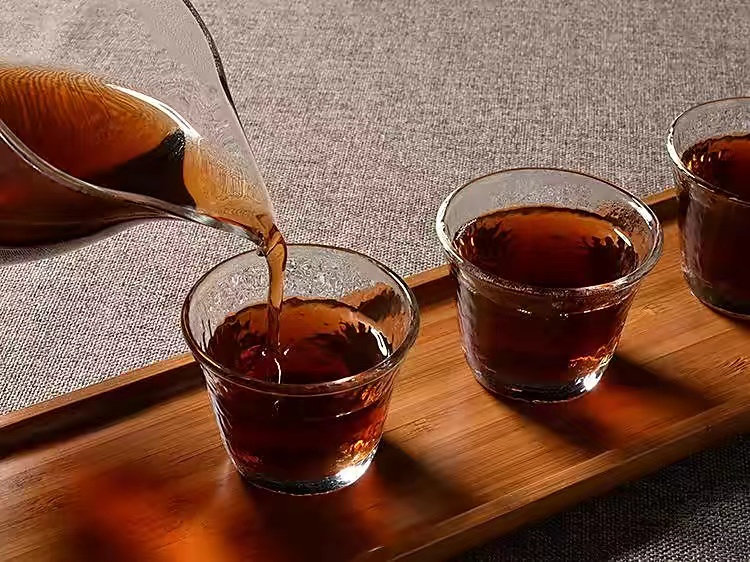
Ready to drink when young:
- Dark red liquor
- Rich, earthy, aged-like aroma
- Smooth, mellow mouthfeel
With further aging:
- Changes are subtle
- Emphasis on stability rather than dramatic evolution
In short: Modern Liu Bao tea focuses on accessibility and consistency.
How to Choose the Right Liu Bao Tea
Based on Your Drinking Goal
For everyday enjoyment → Modern-process Liu Bao tea
For long-term aging or collection → Traditional-process Liu Bao tea
Based on Taste Preference
Prefer smooth, earthy, easy-drinking tea → Modern process
Enjoy complexity, evolution, and structure → Traditional process
Based on Experience Level
New to dark teas or Chinese tea culture → Start with modern-process Liu Bao tea
Familiar with aged teas and fermentation styles → Explore traditional-process Liu Bao tea
Conclusion
Traditional and modern Liu Bao teas are not competitors but two expressions of the same heritage. One emphasizes patience and natural transformation, while the other prioritizes efficiency and immediate drinkability.