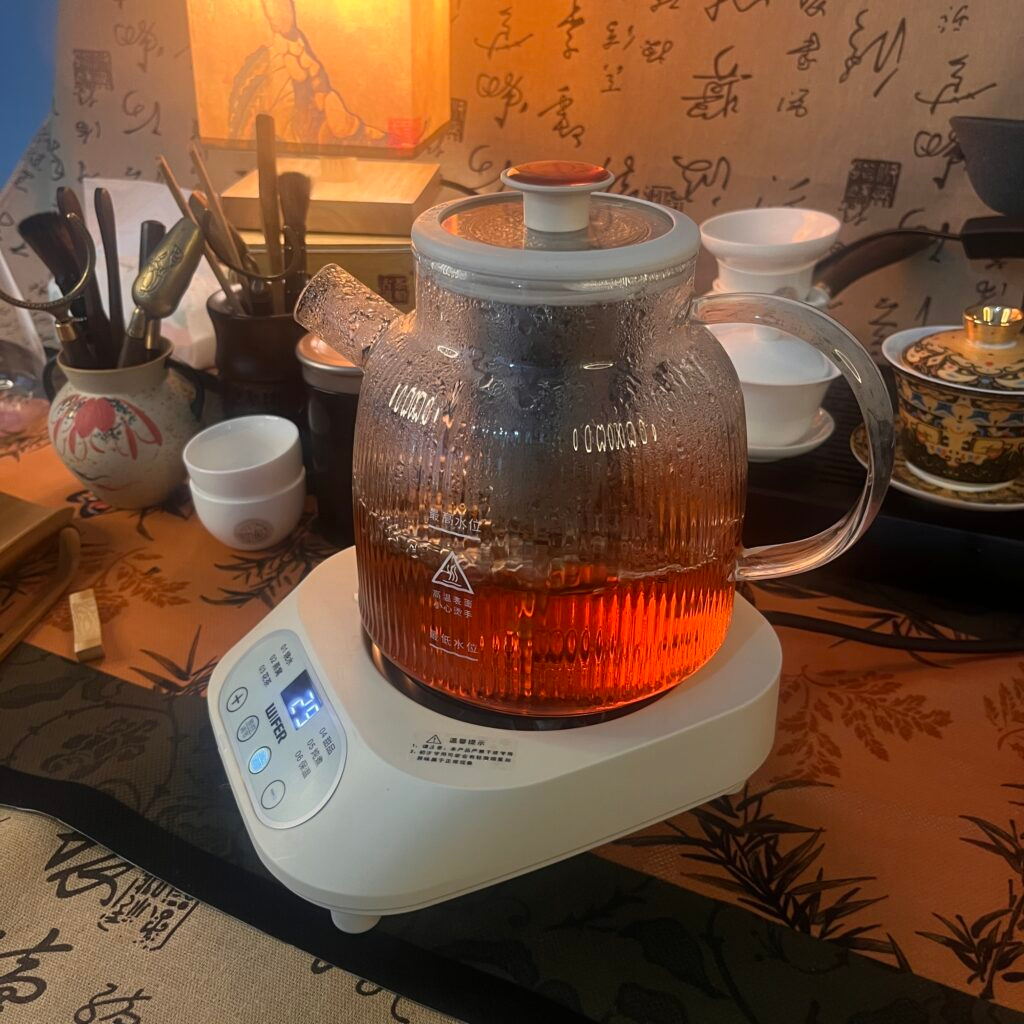
Traditional method of boiling Liubao tea in a clay pot on a ceramic stove
Yes, Liubao Tea Is Meant to Be Boiled
Unlike green or lightly oxidized teas, Liubao tea is traditionally suitable for boiling, especially aged grades. In Guangxi, boiling Liubao tea has long been part of daily life.
If your Liubao tea tastes thin when brewed, boiling may unlock its true depth.
Why Boil Liubao Tea?
Extracts deeper aged aromas
Creates a thicker, smoother mouthfeel
Gentle on the stomach, ideal for cold seasons
How to Boil Liubao Tea
Teaware
Glass kettle (visual control)
Yixing teapot (enhanced aroma)
Nixing clay pot (traditional match)
Water
Best: spring water
Temperature: start at 100°C
Tea-to-Water Ratio
Premium grades: 1g : 70ml
Lower grades: 1g : 60ml
Four-Step Method
Place tea in a tea bag or strainer
Rinse twice
Add tea at ~90°C
Simmer at ~90°C for 3 minutes
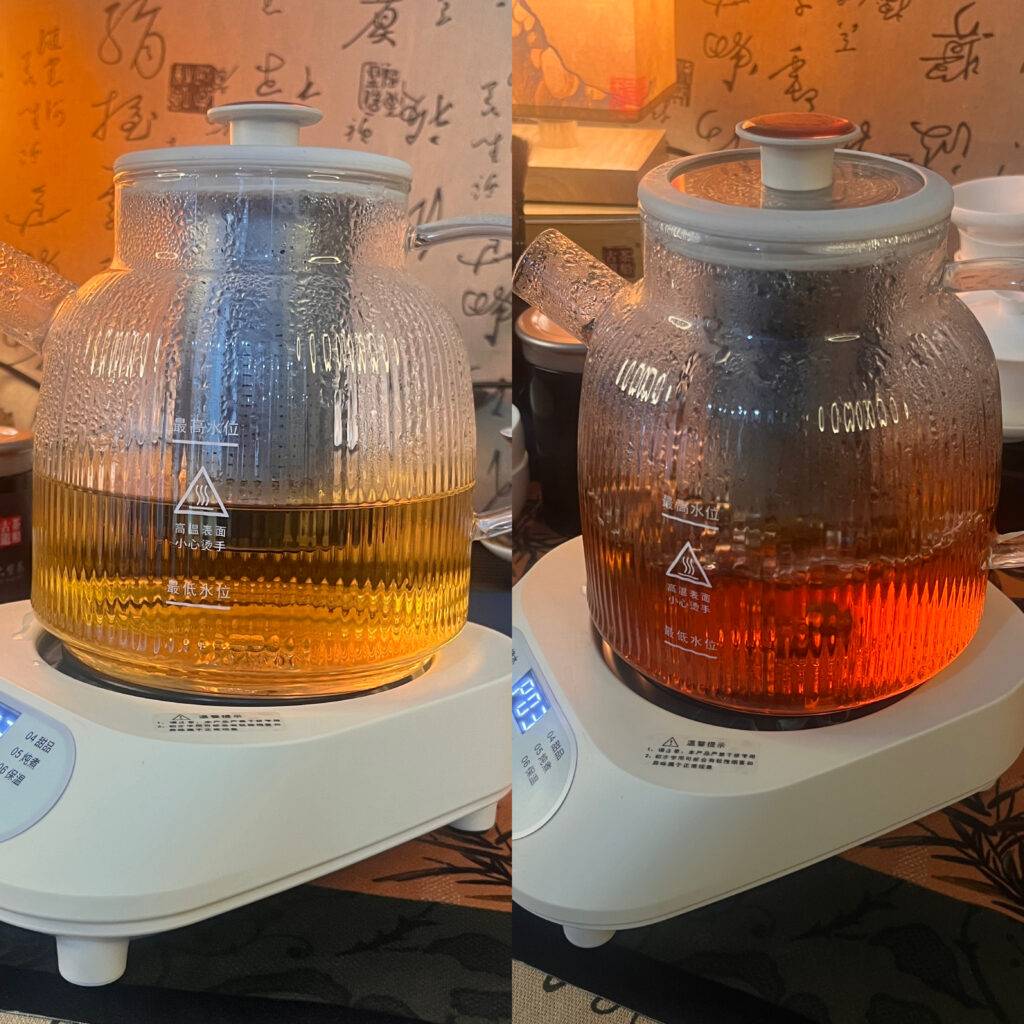
Color change of Liubao tea liquor during boiling
Flavor Profile of Boiled Liubao Tea
Concentrated aged wood aroma
Thick, silky liquor
Long-lasting sweetness
Highly reboil-friendly
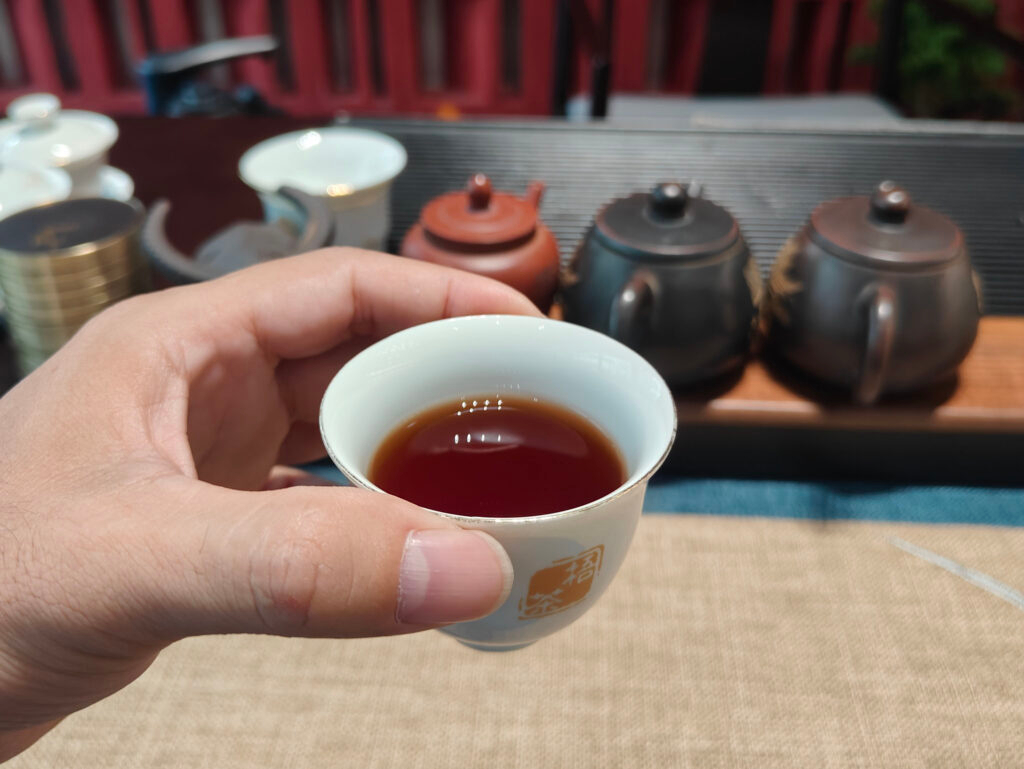
Finished boiled Liubao tea with deep amber color
Conclusion
Boiling Liubao tea is not about intensity, but harmony. With gentle heat and patience, Liubao tea reveals its warm, grounding character.
FAQ (Frequently Asked Questions)
Q1: Can fresh Liubao tea be boiled?
It is not recommended. Fresh Liubao tea is better suited for brewing, as boiling may bring out rough or undesirable flavors.
Q2: Can I boil Liubao tea over an open flame?
Yes, but only over low heat throughout the process. Temperature control is more difficult with an open flame.
Q3: Can boiled tea leaves be brewed again?
Yes. After boiling, the leaves can be brewed again, resulting in a softer and milder flavor profile.