What Is the “Golden Flower” on Liubao Tea?
Introduction: Is Golden Flower a Good Sign or a Risk?
When examining aged Liubao tea, some drinkers notice small yellow dots or patches on the surface, commonly known as “Golden Flower.”
Is it mold? A defect? Or a sign of quality?
To answer this, we need to look at the microbiology behind Liubao tea aging.
What Is Golden Flower Scientifically?
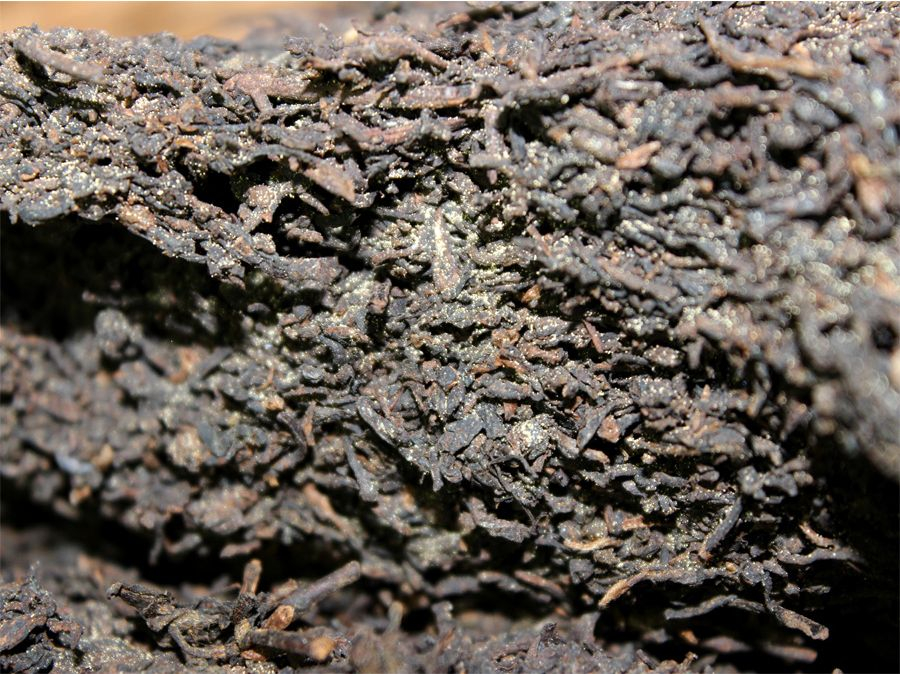
Golden Flower refers to colonies of Eurotium cristatum, a beneficial fungus commonly found in certain post-fermented teas.
Under magnification, the visible yellow spots are clusters of this fungus. When they grow to a sufficient density, they become visible to the naked eye.
Why Does Golden Flower Appear in Liubao Tea?
Liubao tea continues to ferment during aging. Under proper conditions — including moderate humidity, temperature, and airflow — beneficial microorganisms can develop naturally.
Golden Flower tends to appear when:
Tea material is clean
Processing is well controlled
Storage is stable and not overly humid
How Does Golden Flower Affect Liubao Tea?
1. Smoother, Sweeter Taste
Eurotium cristatum produces enzymes such as:
Amylase, converting starch into simple sugars
Oxidative enzymes, promoting polyphenol transformation
These processes often result in:
Reduced bitterness
Increased sweetness
A smoother mouthfeel
2. Deeper, Clearer Liquor Color
Enzymatic oxidation contributes to the transformation of polyphenols, giving aged Liubao tea its characteristic amber to reddish-brown liquor.
3. Reduced Harsh or Green Notes
Proper fungal activity helps mellow rough flavors, making the tea more rounded and balanced.
Does Golden Flower Always Mean Good Quality?
Not necessarily.
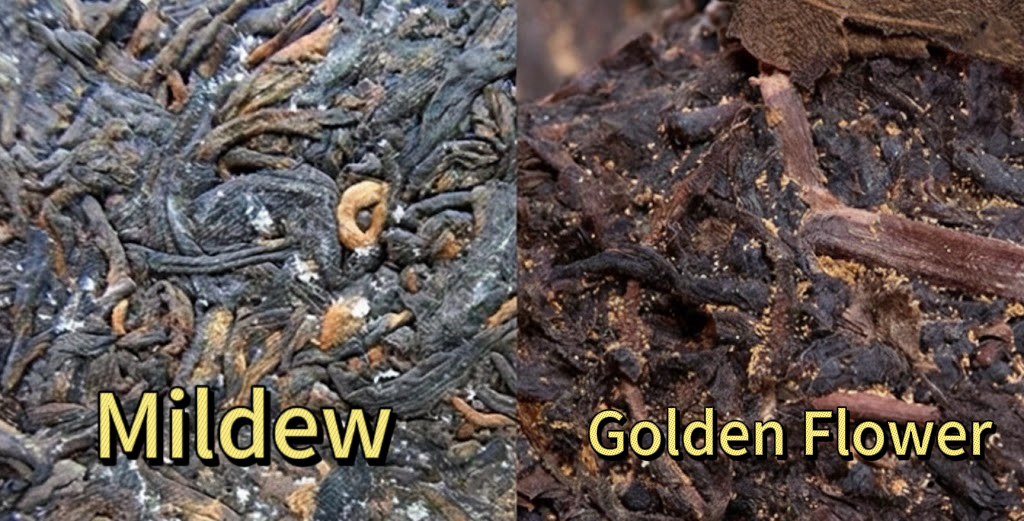
Quality depends on whether the Golden Flower developed naturally and cleanly, without contamination from unwanted molds.
How to Tell Healthy Golden Flower from Problematic Tea
Signs of Healthy Golden Flower
Golden yellow to light yellow color
Naturally scattered distribution
Dry, clean tea leaves
Pleasant aged aroma
Warning Signs
Grey, green, or black patches
Damp or clumped leaves
Musty, sour, or unpleasant odors
Does Liubao Tea Need Golden Flower to Be Good?
No. Many high-quality Liubao teas age beautifully without visible Golden Flower. Flavor quality depends on raw material, processing, storage, and brewing.
Golden Flower is a possible outcome, not a requirement.
Final Thoughts
Golden Flower in Liubao tea reflects a complex aging process, not a simple quality label.
Understanding how it forms — and how to evaluate it — allows you to appreciate Liubao tea with clarity and confidence.
Frequently Asked Questions
1. Is Golden Flower the same as mold?
No. Golden Flower is a beneficial fungus, while mold usually appears grey or green and produces unpleasant odors.
2. Can young Liubao tea have Golden Flower?
It is uncommon. Golden Flower usually appears after a period of proper aging.
3. Does Golden Flower make Liubao tea sweeter?
Often, but not always. Sweetness also depends on leaf quality, processing, and brewing.