
The Dragon Mother (Longmu), a revered goddess of the Xijiang River basin with roots in the Warring States and Qin dynasties, is a central figure in Lingnan folk belief, celebrated for her benevolence and guardianship over waterways. Her legend, deeply intertwined with the culture of the Cha chuan Gu Dao (Tea Boat Ancient Road) and Liubao tea in Cangwu, Wuzhou, unfolds as a tapestry of myth and humanity :
The Birth and Adoption of the Dragon Mother
Born in Teng County, Wuzhou in the 4th century BC to the Wen clan, the Dragon Mother faced tragedy at birth: her family’s home was destroyed by floods, and her dying father placed her in a wooden basin to drift down the Xijiang River . She was rescued by Fisherman Liang San in Yuecheng, Deqing (Guangdong), who named her Long Ji and raised her as his own after the basin mysteriously returned to his boat three times—a sign of divine will . From childhood, she displayed extraordinary wisdom: she could read ten lines at a glance and possessed a compassionate heart that led her to heal the sick and aid the poor .
Raising the Five Dragon Sons
One day, while washing clothes by the river, the young Wen found a giant glowing stone egg and took it home. After 49 days, the egg hatched into five tiny dragons, which she raised as her children . As the dragons grew, they revealed their divine powers: they controlled the river’s tides, brought rainfall for crops, and protected fishermen from storms . In return, the dragons brought fish to their “mother” and helped her lead the local people to dig canals, build dams, and conquer floods . For this, she was hailed as the Dragon Mother—the patron saint of the Xijiang.
Defiance of the First Emperor
When Qin Shi Huang heard of the Dragon Mother’s divine connection to dragons (symbols of imperial power), he sent envoys to summon her to his capital, hoping to claim her as a symbolic “mother” . The Dragon Mother reluctantly agreed, but her dragon sons used their magic to redirect her boat back to the Xijiang four times. Recognizing heaven’s will, the emperor relented, allowing her to remain with her people . This act solidified her status as a protector of the common folk over imperial authority.
Legacy and the Tea Boat Ancient Road
After her passing, the five dragons mourned by transforming into five mountains (the Wulong Mountains in Wuzhou) to guard her tomb . Villagers built the first Dragon Mother Temple in Yuecheng, and her worship spread across the Xijiang basin—today, over 200 temples honor her, including Wuzhou’s China’s First Dragon Mother Temple with a 38-meter-tall statue .
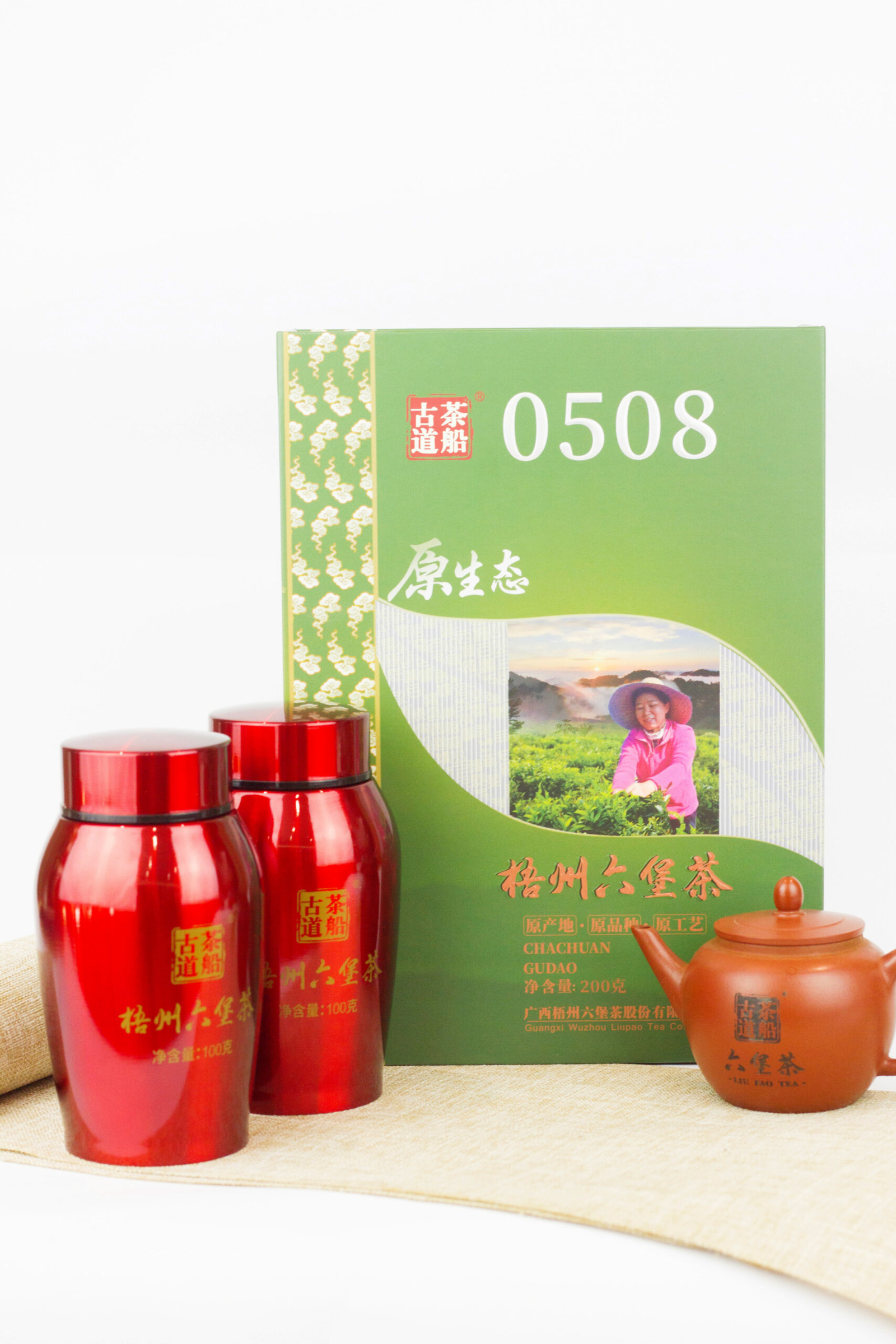
Her legacy merged with Wuzhou’s Tea Boat Ancient Road, a historic trade route for Liubao tea. Local tea merchants dedicated the Chachu Ancient Road 0508 tea to her, marking her birthdate (the 8th day of the 5th lunar month) as a tribute to her role as the guardian of river trade . Each year, the Dragon Mother Festival draws thousands of pilgrims to burn incense, pray for safe voyages, and honor her with offerings of Liubao tea .